FUE Brow Restoration
Eyebrow Transplant Edinburgh
Eyebrow transplant treatment in Edinburgh uses carefully selected donor hairs to improve sparse, thin, over-plucked, scarred or partially missing eyebrows. Treatment planning considers brow shape, facial proportions, hair angle, direction, density, skin health and the underlying cause of eyebrow loss.
- Individual eyebrow shape and symmetry planning
- Precise graft angle, direction and shallow placement
- Donor-hair and underlying hair-loss assessment
What Is an Eyebrow Transplant?
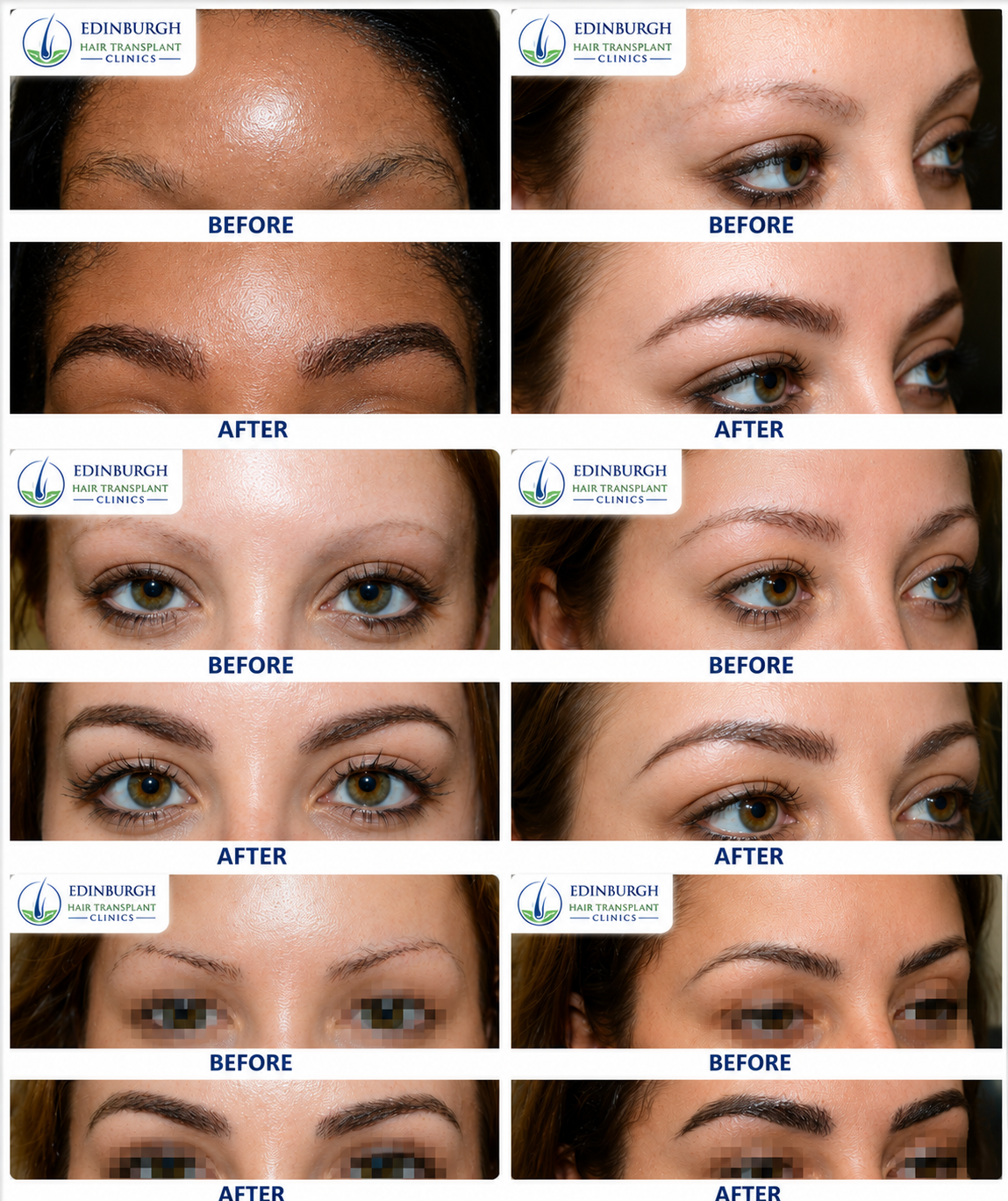
An eyebrow transplant is a surgical procedure in which donor hairs, usually taken from a suitable scalp area, are implanted into the eyebrow region.
Individual follicular-unit grafts are extracted, prepared and placed into the planned brow. Each graft must follow the intended angle, curvature, spacing and direction.
The aim may be to improve general fullness, rebuild part of the brow, cover a selected scar or create better balance between both eyebrows. The treatment plan should respect the patient’s existing brow pattern and facial proportions.
Scalp hairs can continue growing longer than natural eyebrow hairs. Regular trimming, brushing and grooming may therefore be required after an eyebrow transplant.
Why Can Eyebrow Hair Become Thin or Patchy?
Eyebrow loss can have several causes. New, unexplained or progressive eyebrow thinning should be medically assessed before surgery is considered.
Over-Plucking or Threading
Repeated removal of eyebrow hairs may damage some follicles and reduce natural regrowth.
Scarring or Trauma
Injury, burns, previous surgery or other trauma may leave selected gaps within one or both brows.
Medical or Skin Conditions
Autoimmune, hormonal, inflammatory, nutritional or dermatological conditions may affect eyebrow growth.
Natural Density and Ageing
Some people naturally have fine, sparse or uneven eyebrow growth, while density may also change with age.
Surgery should not be used to conceal an active or undiagnosed cause of eyebrow loss. The underlying condition should be reviewed first.
Who May Be Suitable for an Eyebrow Transplant?
Suitability depends on the cause and stability of eyebrow loss, donor-hair quality, skin health, medical history, previous treatments and realistic expectations.
Eyebrow Transplantation May Help With
- Naturally thin or sparse eyebrows.
- Long-term over-plucking or threading.
- Patchy or uneven eyebrow growth.
- Partial eyebrow loss.
- Selected scar-related gaps.
- Realistic improvements in shape or density.
Surgery May Not Be Appropriate When
- The cause of eyebrow loss remains active or untreated.
- There is inflammation, infection or unstable skin disease.
- Donor hair is unsuitable for brow restoration.
- Expected density or symmetry cannot be achieved safely.
- Medical history makes elective surgery unsuitable.
- A non-surgical option better matches the patient’s goals.
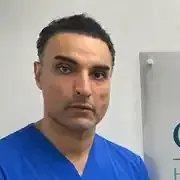
Eyebrow Assessment With Dr Harpreet Kalra
Consultation with Dr Kalra includes assessment of eyebrow shape, density, asymmetry, skin health, previous scarring, tattooing or microblading and donor-hair suitability.
Brow design should consider the inner brow, arch, tail, facial proportions, natural asymmetry and the direction in which existing eyebrow hairs lie.
Natural appearance depends on appropriate design, careful donor selection and precise graft placement rather than simply implanting the largest possible number of hairs.
Read about Dr KalraHow Does an Eyebrow Transplant Work?
Assessment
The pattern and cause of eyebrow loss, skin health, donor hair, medical history and previous treatments are reviewed.
Brow Design
The inner brow, body, arch, tail, width, direction and realistic density are planned around the patient’s facial proportions.
Local Anaesthetic
Local anaesthetic is used to numb the planned donor and eyebrow recipient areas. Anaesthetic injections can be uncomfortable.
FUE Donor Extraction
Suitable follicular-unit grafts are removed individually from the planned donor area using small circular extraction incisions.
Recipient-Site Creation
Small recipient openings are created at shallow angles following the planned direction of the brow.
Graft Placement
Prepared grafts are positioned according to the planned shape, spacing, curvature, direction and density.
Why Brow Angle and Direction Matter
Eyebrow hairs change direction across the brow. Grafts that are placed too upright, too deeply or in the wrong direction may look unnatural.
Inner Brow
The inner brow usually requires softer density and carefully controlled upward or outward direction.
Brow Body
Grafts should lie close to the skin and blend with the direction of the patient’s existing eyebrow hairs.
Arch
The arch should suit the patient’s facial proportions rather than following a standard or fashionable template.
Brow Tail
The tail normally requires controlled tapering, lower density and precise directional placement.
Perfect symmetry should not be promised. Natural eyebrows and facial features normally contain some asymmetry. The aim is appropriate balance rather than an artificial identical shape.
What Happens on the Day of Treatment?
The Procedure
The proposed brow design should be reviewed before treatment begins. The donor and recipient areas are then prepared and local anaesthetic is administered.
Procedure length varies according to the treatment plan, whether one or both brows require treatment and the number of grafts involved.
Eyebrow transplantation is normally completed as a day procedure, so an overnight clinic stay is not usually required.
Early Aftercare
- Avoid rubbing, scratching or pressing on the brows.
- Follow the individual washing instructions.
- Do not pick recipient-area scabs.
- Avoid brow makeup until cleared by the clinic.
- Follow advice concerning exercise and sweating.
- Use only products approved by the clinic.
- Contact the clinic about unexpected or concerning symptoms.
Eyebrow Transplant Recovery and Growth
Healing and New Growth
Early recovery may include redness, tenderness, swelling and small scabs around the implanted hairs.
Some transplanted hairs may shed after the initial healing stage. Later growth normally develops gradually over the following months.
New hairs may initially look fine, uneven or grow in at different times. Density, texture and appearance can continue developing for many months.
Long-Term Grooming
Transplanted scalp hairs may retain scalp-hair growth characteristics and grow longer than natural eyebrow hairs.
- Trim transplanted hairs when necessary.
- Brush hairs into the intended direction.
- Follow advice concerning brow products.
- Attend recommended follow-up reviews.
- Report unusual skin or hair changes.
Eyebrow Transplant, Microblading and Tattooing
These options work in different ways. The appropriate choice depends on existing brow hair, skin condition, scarring, previous pigment, maintenance preferences and realistic objectives.
Eyebrow Transplant
Moves real donor hairs into the brow area. Surgery, healing, trimming and ongoing grooming may be required.
Microblading
Uses semi-permanent pigment strokes to imitate eyebrow hairs. It does not create new hair growth.
Eyebrow Tattooing
Uses pigment to create the appearance of a brow but does not restore actual eyebrow follicles.
How Much Does an Eyebrow Transplant Cost?
Cost should be confirmed after individual assessment. The quotation depends on the amount of restoration required, donor-hair suitability and the complexity of the treatment plan.
- Whether one or both brows require treatment.
- The estimated number of hairs or grafts required.
- Partial restoration or full brow reconstruction.
- Scar coverage or previous pigment treatment.
- Donor-hair suitability and procedure complexity.
Possible Risks and Limitations
- Bleeding, swelling, tenderness and temporary scabbing.
- Infection or reaction to medication or anaesthetic.
- Small donor-area scars following FUE extraction.
- Poor or uneven graft growth.
- Asymmetry or unwanted brow shape.
- Incorrect hair angle, direction or curvature.
- Visible scarring or skin-texture changes.
- Continued progression of the underlying cause of hair loss.
- Ongoing trimming and grooming requirements.
Eyebrow Transplant FAQs
What method is used for eyebrow transplantation?
FUE is normally used to remove individual follicular-unit grafts from a suitable donor area before placement into the eyebrows.
Can an eyebrow transplant restore over-plucked brows?
Selected patients with long-term over-plucking may be suitable, depending on the remaining follicles, skin condition and donor hair.
Can an eyebrow transplant cover a scar?
Selected scars may be treated, but graft growth and density can vary according to the scar tissue and its blood supply.
Do transplanted eyebrow hairs need trimming?
Yes, trimming may be required because transplanted scalp hairs can grow longer than natural eyebrow hairs.
Is eyebrow transplantation better than microblading?
They are different treatments. A transplant moves real donor hairs, while microblading uses pigment to imitate brow hairs.
When will eyebrow transplant growth begin?
Some implanted hairs may shed before gradual new growth begins over the following months.
Can both eyebrows be treated?
One or both brows may be considered depending on the cause of hair loss, existing shape, donor supply and treatment objectives.
Are eyebrow transplant results guaranteed?
No. Graft growth, density, symmetry, healing, scarring and final appearance vary between patients.
Patient Reviews
Read patient feedback about consultations, communication, treatment-day organisation, recovery guidance and aftercare.
